


Sonic Forces: PvP Battle Race
SEGA
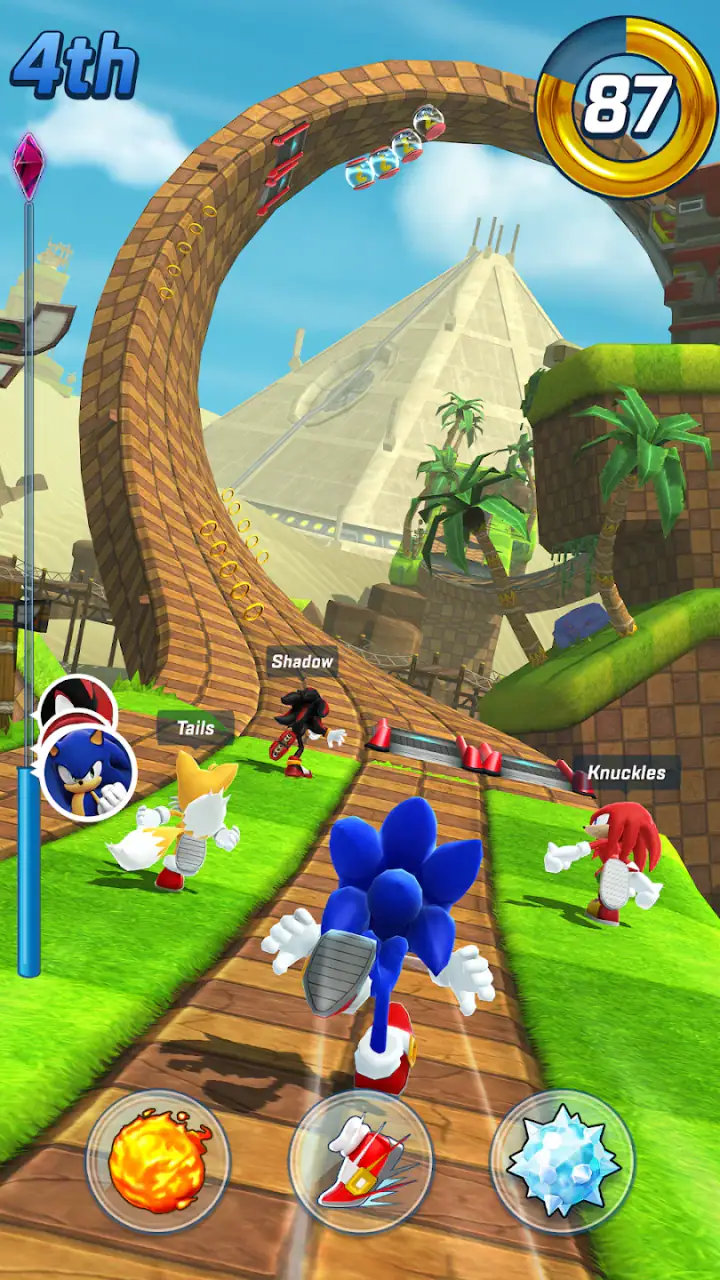
The first few races in Sonic Forces: PvP Battle Race are easy to understand and hard to put down. I picked a character, entered a short competitive run, and immediately understood the appeal: the action moves quickly, the Sonic cast gives every race personality, and the controls are simple enough to learn without a tutorial-heavy opening. It is a free adventure game from SEGA, but its real identity is competitive rather than story-driven.
That distinction matters. I would not approach this as a traditional Sonic platformer with a long campaign. It works better as a quick multiplayer game for spare moments, where each race asks for attention but does not demand a large time commitment. The store page presents Sonic Forces as a fast multiplayer racing experience, and that is an accurate starting point, although the important question is whether the excitement survives after the novelty wears off.
The game is available to an Everyone audience, runs on Android 6.0 or later, and has been available since November 15, 2017. Its current version is 6.4.0, so this is not a forgotten experiment that disappeared after launch. With a 4.5 average from around 1.1 million ratings and over 100 million installs, it has clearly attracted a large audience. Those figures do not guarantee that every player will enjoy it, but they do suggest that finding an active community is part of the experience.
Related News

Why the first week feels so inviting
What worked best for me at the beginning was the compact rhythm. I could play a race, see how I performed, and decide whether I wanted another attempt without setting aside an entire evening. That makes the game a natural fit for a commute, a short break, or the few minutes before doing something else. The Sonic theme also does useful work: familiar characters and high-speed movement make the opening feel lively before I have learned every strategic detail.
The controls are approachable, but the races are not completely mindless. Steering at speed requires anticipation, especially when the track layout changes quickly or when other racers interfere with a clean line. My first instinct was to react at the last second, which usually produced messy turns. I had better results when I looked ahead and treated each section as a sequence to prepare for rather than a series of emergencies.
Related News

Why WhatsApp Messenger Still Makes Everyday Communication Feel Easy

Jurassic World: The Game Is the Better Dino Tycoon for Strategic Players

Threads in Real Life: Who Should Join, Lurk, or Leave

How SHEIN Turned Shopping Into an Endless Content Feed

How to Make Fortnite Feel Smarter on Mobile

Should You Switch to Microsoft Outlook on Mobile?
That is one of the first non-obvious lessons here: speed alone is not enough. A player who knows when to preserve a good position can often outperform someone who simply takes every risky opportunity. I started paying attention to the safest route through a section, then used more aggressive choices only when I needed to recover ground. This made the races feel less like random chaos and more like short decisions under pressure.
The multiplayer format gives the early sessions a useful sense of consequence. Even a brief race feels more meaningful when I am trying to beat other players instead of only chasing a personal time. At the same time, this structure can be less welcoming to someone who wants a relaxed Sonic game. A player looking for exploration, platforming, or a substantial single-player story will find the focus here narrower than in the console adventures.
I also noticed that the familiar cast is not just decoration. Choosing a character can make the experience feel more personal, and switching characters helped prevent the opening sessions from becoming visually repetitive. I would still avoid assuming that changing characters automatically solves every strategic problem. The more useful approach is to test how a character feels in actual races, then keep a small group of favorites rather than constantly changing without learning their strengths.
Gallery
Small habits that improve early races
My best first-week adjustment was to stop treating every race as a sprint from the opening moment. The beginning often rewards clean movement more than reckless acceleration. I tried to stay composed, watch how the course opened up, and save my most ambitious moves for moments when they could change my position. This is especially useful for new players who are tempted to copy the visual energy of Sonic and play as aggressively as possible.
I also recommend playing several races before deciding that a particular character or track style is not for you. Early mistakes can come from unfamiliarity rather than a genuine mismatch. Once I recognized recurring turns and learned where I usually lost control, improvement became more noticeable. The game does not need a long session to teach this; repeated short attempts are more useful than one distracted marathon.
Another practical tip is to play with a stable connection whenever possible. Competitive racing is much less satisfying when input timing feels uncertain, and the short format leaves little room to recover from a bad moment. I would not choose this as my main game for places where connectivity is unreliable. A single-player alternative is usually better when the priority is dependable offline entertainment.
What remains valuable after the novelty fades
After the initial excitement, the strongest reason to return is the combination of short races and personal improvement. I enjoyed trying to make fewer mistakes, hold better lines, and respond more calmly when another racer disrupted my plan. That kind of value is different from a large adventure game, where progress comes from discovering new areas or completing a long story. Here, the repeatable activity is the race itself.
For me, the game fits best into a habit of brief sessions. I might play a few races while waiting for an appointment, then stop before the experience becomes tiring. Because each match is compact, it does not punish me for having limited time. This is a genuine advantage over larger racing or adventure games that expect longer uninterrupted sessions.
The trade-off is that recurring value depends heavily on whether I enjoy competition for its own sake. If winning, recovering from a poor start, and refining small decisions are satisfying, the game has a reason to stay installed. If I need constant story progression, new worlds, or a clear ending, the loop can feel thin once the first-week discovery period has passed.
The large player base helps the game feel like a living multiplayer product rather than a one-off novelty. Still, popularity does not remove the personal question of variety. I found the experience more durable when I set small goals, such as improving a particular weakness or becoming more consistent with a favorite character. Without that self-directed purpose, repeating similar races can start to feel like maintenance rather than play.
This is also where the free-to-play structure deserves attention. The game costs nothing to start, but in-app purchases range from $0.99 to $149.99 per item. I would treat that range as a reason to decide on a personal spending limit before getting deeply invested. The free entry is helpful, especially for trying the racing loop, but players who dislike purchase prompts or progression pressure should be cautious about making it a daily habit.
I do not think spending is necessary to find out whether the core racing is enjoyable. My advice is to play naturally first and judge the controls, competition, and repeat value before considering any purchase. If the game is only fun when progress feels faster, that is useful information: it may be better as an occasional free game than as a long-term commitment.
Who gets the most from the monthly loop
I would recommend it most strongly to Sonic fans who enjoy competitive mobile games and to players who want quick races rather than a large adventure. It also suits people who like practicing the same activity until their decisions become cleaner. A teenager looking for a colorful multiplayer game, or an adult wanting a fast distraction between tasks, can both find a good use for it.
A realistic everyday scenario would be a short evening break after work. I could play two or three races, notice that I am repeatedly losing time in the same section, and use the next session to focus on that one issue. The game works well in that space because it provides immediate feedback without requiring me to remember a complicated story or return to a large map.
I would be less enthusiastic for someone who wants a calm game with no competitive pressure. I would also suggest a different type of Sonic title to a player who primarily wants platforming, exploration, or a narrative campaign. The recognizable characters may attract that audience, but the competitive racing format is the central activity, not a side feature.
Maintenance, friction, and the cost of staying interested
The main maintenance burden is not installation or setup; it is attention. To keep improving, I need to remember how I lose races, adjust my approach, and resist playing on autopilot. That is manageable in short bursts, but it becomes tiring if every session turns into a demand to perform better. The game rewards focus, and focus is not always what I want from a mobile title.
There is also a practical device consideration. High-speed multiplayer games are more enjoyable when the phone responds consistently and the connection is dependable. I would close unnecessary background activity, keep the device comfortable to hold, and avoid starting a serious session when the battery is already low. These are ordinary precautions, but they matter more in a game where a small delay can affect the result.
The age rating of Everyone makes the game broadly accessible, but that does not mean every family will want unrestricted purchase access. Since optional items can reach a high price, I would use the platform’s purchase controls if a child will be playing. The free label makes the game easy to try, while the in-app purchase range means adults should still pay attention to how the game is used over time.
Version 6.4.0 indicates that the app has continued receiving updates, which is encouraging for a multiplayer game. Updates can help a long-running title remain usable and relevant, but they can also create a habit of checking back simply because something has changed. I prefer to return when I genuinely want a race rather than treating every update as an obligation to keep up.
That distinction is important for lasting value. A game earns space on my phone when it supports a routine I enjoy, not when it merely gives me another notification or another reason to open it. Sonic Forces does its best work when I choose a short session with a clear purpose: warm up, practice a weakness, or enjoy a few competitive races. It is less appealing when I open it automatically and discover that I am playing without interest.
Where fatigue starts to appear
The first source of fatigue is repetition. Short races are convenient, but the same convenience can make the basic loop feel exposed. There is no long journey to disguise the structure; I am repeatedly racing, reacting, and trying to improve. Players who need frequent changes of activity may reach their limit sooner than fans of focused competitive games.
The second is emotional rather than mechanical. Losing a close race can be exciting when I understand why I lost. It is frustrating when the result feels outside my control or when I was already tired. I found that stopping after a few unfocused races was better than chasing a win while irritated. The game is more enjoyable when I treat each result as feedback, not as a judgment on the entire session.
The third is the pressure created by optional spending. Even when I do not buy anything, a free-to-play game can make progress feel more complicated than a paid game with a fixed price. Someone who wants a clean, predictable purchase may prefer a premium racing title or a traditional Sonic release. Those alternatives may offer a clearer relationship between payment and content, while this game’s advantage is the ability to begin without paying.
I also would not use it as a replacement for every kind of mobile entertainment. For a quiet waiting room, a puzzle game may be less demanding. For a long offline trip, a self-contained adventure may be more dependable. For a serious racing enthusiast, a deeper simulator may provide more control and technical detail. Sonic Forces occupies a specific middle ground: energetic, accessible, character-driven, and built around short competitive races.
My long-term verdict on keeping it installed
After the novelty fades, I think this game earns a place for the right player, but not automatically. Its lasting strength is the compact competitive loop. I can open it for a few minutes, make a meaningful attempt, and leave without needing to complete a chapter or remember a complicated objective. The Sonic presentation gives those races charm, while the multiplayer focus gives them a reason to matter.
Its weaknesses are equally clear. Repetition can become obvious, competition can be tiring, and the purchase range means I would not recommend playing without some spending awareness. The game is also a poor substitute for a story-led Sonic adventure. Anyone expecting a broad platforming journey should adjust those expectations before installing it.
My practical recommendation is to begin for free, play enough races to understand whether improvement feels rewarding, and establish a session limit before the loop becomes automatic. Keep a favorite character, identify one recurring mistake, and use short focused sessions instead of grinding without a plan. That approach brings out the game’s strongest qualities while reducing the fatigue that can make it feel disposable.
The lasting question is not whether Sonic Forces is exciting at first; it is whether you enjoy returning to the race itself. I do, especially when I want a fast multiplayer break and have the attention to play deliberately. If that sounds like your kind of routine, SEGA’s adventure racer is worth trying. If you want exploration, a substantial campaign, offline certainty, or a one-time purchase with no ongoing pressure, I would choose something else and leave this one as an occasional diversion.
For me, it remains a good fit as a small, repeatable game rather than the only game on my phone. That is a modest recommendation, but an honest one. Sonic Forces: PvP Battle Race does not need to become a permanent daily ritual to be worthwhile; it simply needs to deliver a few enjoyable, competitive races whenever its particular blend of speed, characters, and quick decisions matches my mood.
FAQs for Sonic Forces: PvP Battle Race
What is Sonic Forces: PvP Battle Race about?
Sonic Forces: PvP Battle Race is an exhilarating multiplayer racing game where players can compete with iconic characters from the Sonic universe. You can race against players worldwide in real-time, utilizing character-specific abilities to gain an edge. With a variety of tracks and challenges, the game offers endless entertainment for both Sonic fans and racing enthusiasts.
What devices are compatible with Sonic Forces: PvP Battle Race?
Sonic Forces: PvP Battle Race is available for both Android and iOS devices. It requires Android 4.4 or higher and iOS 10.0 or later. Make sure your device meets these requirements to ensure smooth gameplay. Compatibility with a wide range of devices makes it accessible to a large audience of mobile gamers.
Are there in-app purchases in Sonic Forces: PvP Battle Race?
Yes, Sonic Forces: PvP Battle Race includes in-app purchases. Players can buy in-game currency to unlock characters, power-ups, and other items. While the game is free to download and play, these purchases can enhance the gaming experience. It's important to manage spending, especially if children are playing the game.
How can I unlock new characters in Sonic Forces: PvP Battle Race?
New characters in Sonic Forces: PvP Battle Race can be unlocked by collecting character cards and utilizing in-game currency. These cards can be obtained through gameplay rewards or purchased via in-app purchases. Each character has unique abilities, so unlocking different characters can provide strategic advantages during races.
Is an internet connection required to play Sonic Forces: PvP Battle Race?
Yes, an internet connection is required to play Sonic Forces: PvP Battle Race. Since it's a multiplayer game, real-time connectivity is essential for racing against other players globally. Ensure you have a stable internet connection to enjoy uninterrupted gameplay and fully experience the competitive aspects of the game.
Pros
- Fast-paced
- engaging gameplay.
- Stunning graphics and animations.
- Frequent updates with new content.
- Simple controls
- easy to learn.
- Competitive multiplayer mode.
Cons
- In-app purchases can be pricey.
- Requires constant internet connection.
- Ads can be intrusive at times.
- Limited character customization.
- Occasional server connectivity issues.


